
1. Every autumn Jewish holiday falls during the same Hebrew month—Tishrei.
On the secular calendar, however, they might fall in September, October, or both!
2. Holidays can only occur on certain days of the week.
Yom Kippur, for example, can only start on Sunday night, Tuesday night, Wednesday night, or Friday night. It will never start on Saturday night, Monday night, or Thursday night.
3. The phrase Rosh Hashanah “head of the year” never appears in the Torah.
It is referred to in the Torah by the name “Yom T’ruah” (meaning “the day of blasting”), which is a reference to the shofar.
4. Yom Kippur is the only day of the year that features six separate prayer services.
In addition to the three daily services, there are three additional services—Musaf (additional morning prayers), Kol Nidre (at the very beginning), and Neilah (at the very end).
5. Yom Kippur is one of two 25-hour fast days on the Jewish calendar.
The other, Tisha B’Av, which commemorates the destruction of both Temples in Jerusalem, is not offered during school because it falls in late July or early August.
6. Sukkot is one of four Jewish holidays to start in the middle of a Hebrew month to correspond with the full moon.
In ancient times, before the discovery of electricity, it was a lot easier to celebrate holidays in the middle of the month with the added illumination of a full moon!
7. The seventh (and maybe last) day of Sukkot, Hoshana Rabbah, holds special significance.
In Kabbalistic tradition, the gates of heaven, open through Yom Kippur, are said to open once more on the night of Hoshana Rabbah.
8. The holiday of Shemini Atzeret is sort of a continuation of Sukkot, and sort of not.
The Torah mentions Shemini Atzeret as taking place on the “eighth day” of Sukkot. However, just before this, it also mentions that Sukkot is seven days long.
9. Shemini Atzeret and Simchat Torah are celebrated simultaneously in Israel.
Outside of Israel, on the other hand, they are usually observed on consecutive days.
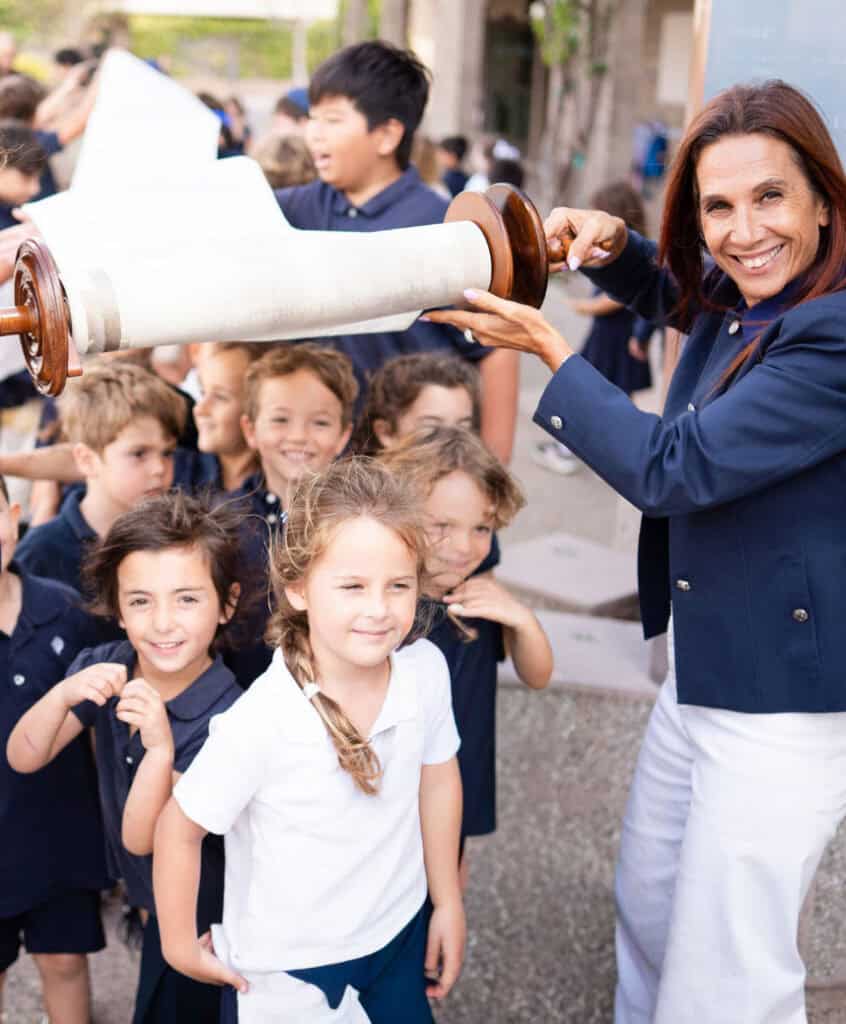
10. Simchat Torah is the only fall holiday not mentioned in the Torah.
It was established to celebrate the renewal of the annual Torah reading cycle. Public Torah reading began several centuries after the Torah was canonized, allowing all Jews to learn Torah by ear.