
Maya Angelou famously said, “I’ve learned that people will forget what you said, people will forget what you did, but people will never forget how you made them feel.”
While adults often treat feelings as an afterthought in learning, our youngest learners process the world through emotional and sensory experience. Long before children grasp abstract ideas or historical timelines, they build understanding through what they touch, hear, see, and taste.
Educators like Maria Montessori and cognitive neuroscientists like Dr. Jean Ayres long ago established that sensory experiences shape how young brains grow. Modern brain research confirms this: when kids engage several senses at once, multiple brain areas light up together—connecting memory, emotion, and physical sensation. This multisensory approach builds stronger, lasting connections in the brain. Listening to a story about Exodus relies on auditory memory alone. But when a child feels the grit of sand, smells bitter horseradish, and tastes crunchy matzah, that memory is encoded across three senses, making it far more memorable and meaningful.
At SDJA, we put this into practice every day:
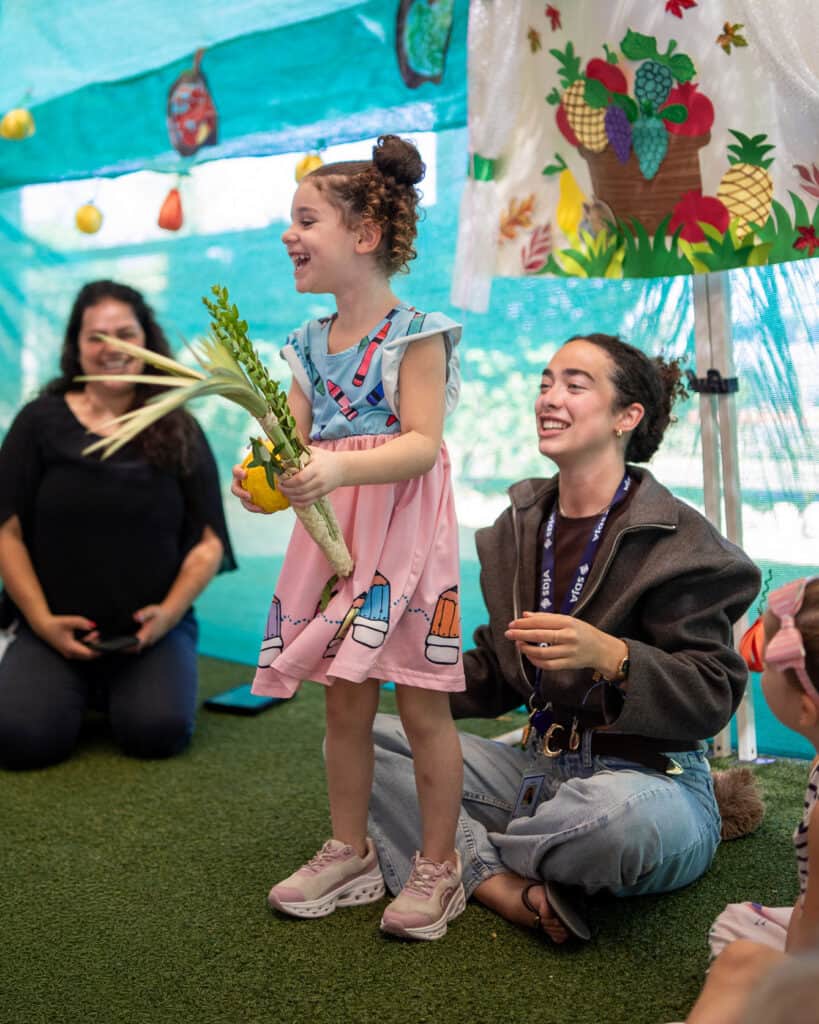
- Tishrei Holidays: Children roll and shape yellow playdough into round challahs, dip apple slices into sweet honey, blow toy shofars, and head outdoors to hang paper chains in the Sukkah.
- Passover: Sensory bins are filled with kinetic sand and plastic bricks for “pyramid building.” Tiny hands roll dough on baking tables, taste crunchy matzah with sweet charoset, and smell sharp horseradish.
- Purim: Classrooms come alive as children fill rice-and-bead groggers to shake out Haman’s name, pinch triangular hamantaschen dough, and dress up in costumes.
This approach easily carries over at home. On a typical Friday night, rather than asking a child to sit still during Kiddush, invite them directly into the experience. Let them feel the give of the dough as they help knead the challah, smell the sweet grape juice before taking a sip, and close their eyes to focus on the warmth of the Shabbat candle flames. When parents transform home routines into sensory touchpoints, holiday concepts move from passive listening to active emotional bonding.
Jewish wisdom has long understood the power of early experiences. As Elisha ben Avuyah writes in Pirkei Avot (4:20): “One who learns as a child, to what is he comparable? To ink written on fresh paper.”
Early sensory experiences stay with children for life. By anchoring traditions in hands-on discovery—both in the classroom and around the family table—we help ensure a child’s first Jewish memories are filled with warmth, joy, and meaningful connection well before they ever open a textbook.