
As parents, it can be hard to watch our children feel worried, nervous, or uncomfortable. Our instinct is often to make those feelings go away. But one of the most helpful things we can teach our kids is that stress and anxiety are normal parts of being human—and feeling uncomfortable doesn’t always mean something is wrong.
Understanding the Brain
Our brains are designed to keep us safe. Sometimes that internal alarm system gets a little overprotective and sends a “Something bad might happen!” message when what we’re actually facing is simply new, challenging, or uncomfortable.
Helping kids understand this can make stress feel less scary. Their brain isn’t working against them—it’s trying to protect them.
Instead of “I can’t do this because I’m nervous,” we can help children practice:
“I’m nervous, and I can still do this.”
It’s Okay to Be Uncomfortable
We don’t want children to believe the goal is to never feel anxious. Tests, new activities, friendship challenges, performances, and trying something difficult can all bring uncomfortable feelings.
When we immediately remove every source of discomfort, kids can unintentionally learn that uncomfortable feelings are something to fear or avoid. Sometimes our job is simply to acknowledge the feeling while showing confidence in their ability to handle it:
“I know you’re nervous. Let’s take a breath. You can do hard things.”
Each experience of “I was nervous, I did it anyway, and I was okay” helps build confidence and resilience.
Practice When They’re Calm
The best time to learn self-regulation skills is before kids are overwhelmed. Trying to teach a coping strategy in the middle of a meltdown is a little like teaching someone to swim after they’ve fallen into the deep end!
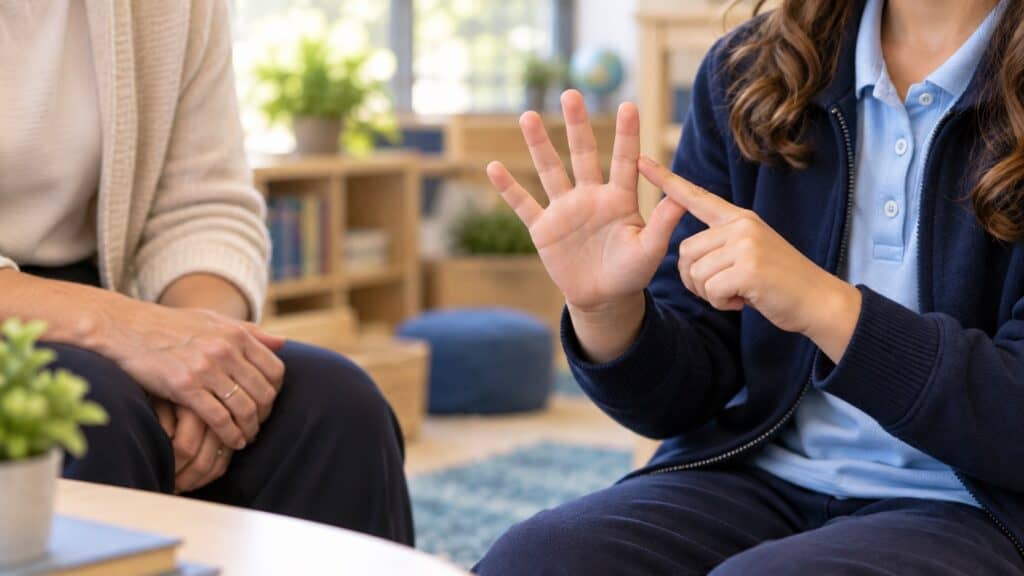
One easy tool is five-finger breathing. Hold up one hand and slowly trace each finger with the other. Breathe in as you trace up a finger and breathe out as you trace down. Continue through all five fingers.
Movement, stretching, belly breathing, positive self-talk, and taking a quiet moment to reset are other simple tools kids can practice regularly. The more familiar these strategies become, the easier they are to use when stress shows up.
And Sometimes Kids Need More Help
Building resilience doesn’t mean children should handle everything on their own. Sometimes stress becomes too big, lasts too long, or begins interfering with school, friendships, sleep, separation, or everyday life. That’s when additional support can be important.
At SDJA, students have a community of adults ready to help. Our counseling team is available for check-ins and additional support, our Sensory Room provides a place to regulate and reset, and our teachers are important partners who know their students and can help recognize when something may be changing.
Ultimately, we want our kids to learn two equally important messages:
“I can handle uncomfortable feelings and do hard things.”
and
“When something feels too big, I know how to ask for help.”
Both are important parts of raising confident, resilient kids.