
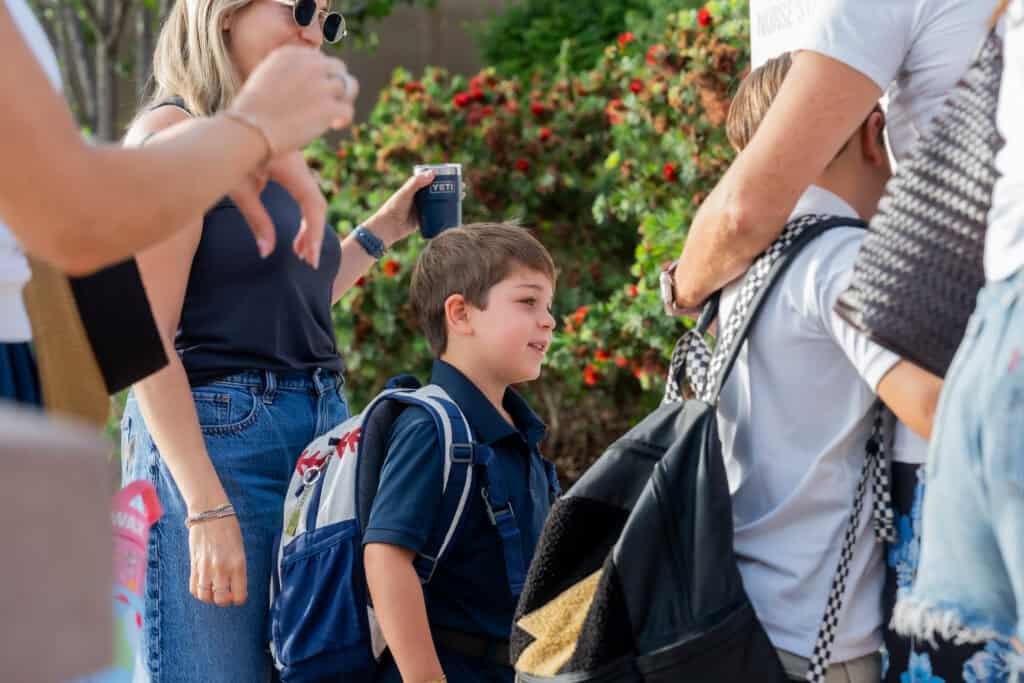
It’s one of the most common questions parents ask at the end of the school day: “How was your day?” And one of the most common answers? “Fine.” After a full day of learning, problem-solving, social interactions, and following routines, a broad question can actually be difficult for children to answer. There is simply too much to sort through. The good news is that small changes in how we ask can lead to much richer conversations.
Ask Specific Questions
Instead of asking your child to summarize the entire day, focus on one moment, feeling, or experience. Try:
- What made you smile today?
- What was the most interesting thing you learned?
- What was something that felt difficult?
- Who did you spend time with at recess or lunch?
- Did someone do something kind for you?
- What are you proud of today?
- Was there something you had to keep trying at, even when it was hard?
- What surprised you today?
- What are you looking forward to tomorrow?
- Is there anything from today you want me to know?
You don’t need to ask them all! One or two thoughtful questions are much more effective than turning the car ride home or dinner into an interview.
Timing Matters
Sometimes children simply aren’t ready to talk right after school. They may need a snack, movement, quiet time, or an opportunity to decompress. Try again later—at dinner, while walking the dog, at bedtime, or while doing something together. Some of the best conversations happen when children don’t feel all the attention is focused on them.
Share Your Day, Too
Conversation is a two-way street. Instead of asking question after question, share something about your own day: “Something was difficult for me today, but I found another way to solve it.” This models reflection and shows children that everyone experiences successes and challenges. You might even make it a family routine to share one high point, one challenge, or something you are grateful for.
Listen Before You Solve
When children share a difficult experience, our instinct is often to immediately fix it. Instead, begin with curiosity: “That sounds frustrating. What happened next?” “What do you think you might do tomorrow?” “Would you like me to listen, or would you like help figuring out what to do?” Listening first helps children feel heard while also developing their confidence and problem-solving skills.
Pay Attention to the Small Stories
“The funniest thing happened at lunch.” “We changed seats today.” “My friend didn’t play with me at recess.” “I got picked to help the teacher.” These small comments can tell us a great deal about what matters in our children’s worlds. Sometimes the best response is simply: “Tell me more.”
Keep the Door Open
Not every conversation needs to be deep, and not every day will produce meaningful answers. The goal isn’t to know every detail of your child’s school day. It’s to create a relationship where your child knows you are interested, available, and ready to listen. So tomorrow, instead of asking “How was your day?”, try: “What made you smile today?” You may be surprised by where the conversation goes.