
As a new school year unfolds at San Diego Jewish Academy, it is worth reflecting on a foundational concept that shapes both our academic model and our entire school culture: the Jewish tradition of chavruta.
Traditionally, chavruta refers to pair-study—two individuals sitting over a shared sacred text, analyzing concepts, challenging each other, and seeking deeper meaning together. What makes a Jewish school uniquely distinct, however, is not merely what students learn, but how they learn. At SDJA, chavruta extends far beyond the bounds of traditional Jewish text study; it is the heartbeat of our approach across every age group and discipline.
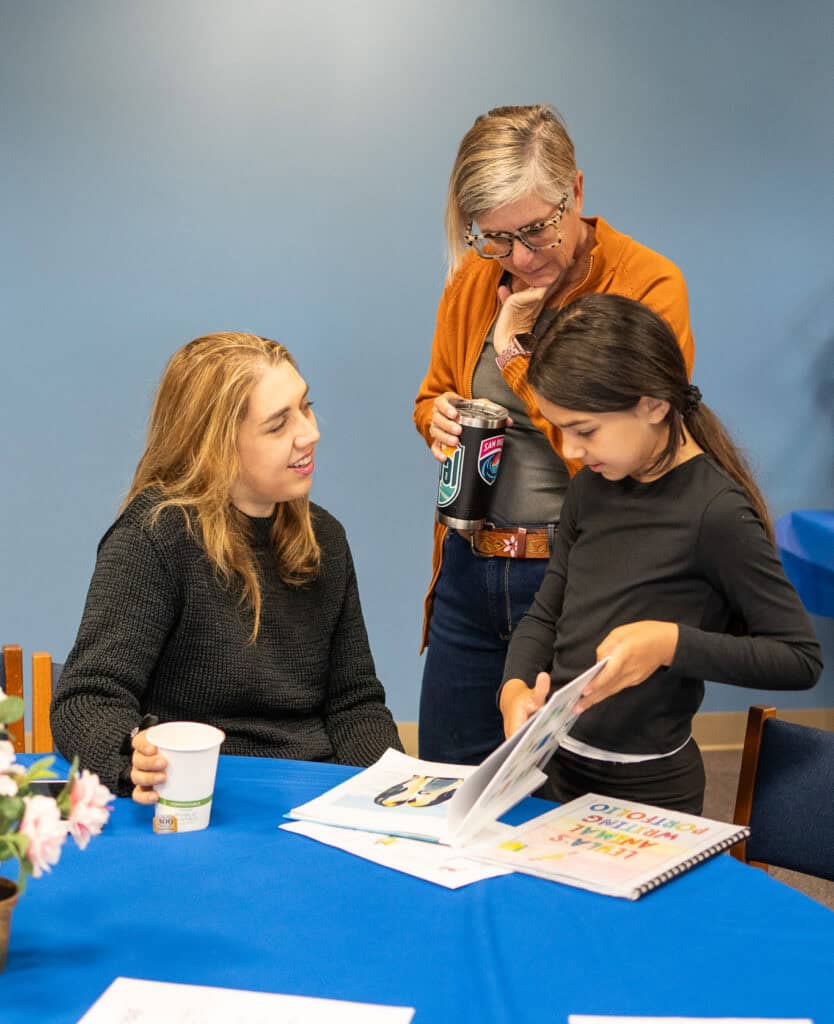
Walk through our campus on any given day, and you will see this collaborative methodology in action. Students sit side-by-side analyzing literature, conducting collaborative experiments in science labs, or joining forces to solve complex mathematical problems. Even our youngest learners in the ECC practice partnership in their play areas, learning early lessons in negotiation, shared discovery, and joint problem-solving.
This spirit of partnership is at the core of SDJA’s mission: preparing each child to learn for Life, guided by Jewish values and rooted in the strength of community. It is chavruta that is the backbone of that strong community. And is evident beyond the classroom, in our broader institutional ecosystem. It is evident in the dynamic collaboration between the school and the Lion’s Parent Association, and it is most critical in the ongoing partnership between teachers and parents.
In a recent Times of Israel Blog, my mentor Jane Taubenfeld Cohen analyzes family-school collaboration, noting that “the strongest partnerships are not built during a crisis; they are built long before one occurs.”
“True educational success relies on parents and educators approaching growth and challenges from “the same side of the table.”
Like an effective chavruta, this relationship relies on mutual respect and defined roles. Parents bring an intimate, lifelong understanding of their child’s unique character, needs, and home context. Educators offer specialized pedagogical expertise, professional insight, and a nuanced understanding of child development within a peer environment.
When both sides respect their respective “lanes” while maintaining transparent communication, a seamless, supportive network surrounds every student. Agreement on every detail is not required—as Taubenfeld Cohen points out, “partnership does not require agreement; it does require a shared commitment to the child at the center of the conversation.”
By intentionally cultivating this partnership, communicating early, and building trust, the entire SDJA community models the very values of collaborative growth, respect, and mutual support that we teach our students every day.